
Malcolm L. MacGregor | January 5, 2026 | Personal Injury Blog

After a workplace injury, many employees expect the workers’ compensation process to focus on recovery and fair treatment. However, injured workers are often surprised when a nurse case manager becomes involved in their claim.
This is why it is important to understand and beware of nurse case managers in workers’ compensation claims. While they may appear helpful, their role is not always aligned with the injured worker’s best interests.
Knowing what nurse case managers do, who they work for, and how their involvement can affect your medical care and benefits can help you protect your rights throughout the claim process.
What Is a Nurse Case Manager in Workers’ Compensation?
A nurse case manager is a medical professional hired by the workers’ compensation insurance company or employer. Their job is to monitor and manage medical treatment related to a work injury.
Nurse case managers may:
- Attend medical appointments with you
- Review medical records and treatment plans
- Communicate with doctors and insurers
- Track recovery progress and work restrictions
Although they are nurses, they are not your nurse. Their primary responsibility is often to the insurance company, not the injured worker.
Why Nurse Case Managers Get Involved
Insurance companies use nurse case managers to control costs and speed up resolution. From the insurer’s perspective, this helps manage expenses and limit time away from work.
Common reasons a nurse case manager is assigned include:
- Serious or long-term injuries
- High medical costs
- Surgery or specialized treatment
- Extended time off work
Their involvement is meant to oversee care, but this oversight can sometimes interfere with treatment decisions.
How Nurse Case Managers Can Affect Medical Treatment
One of the biggest concerns with nurse case managers is how they influence medical care. They may question treatment recommendations or suggest alternatives that reduce costs.
Potential impacts on treatment include:
- Pushing for a faster return to work
- Questioning the need for tests or procedures
- Encouraging treatment changes
- Communicating directly with your doctor
While some coordination can be useful, problems arise when cost control outweighs medical needs.
Do You Have To Cooperate With a Nurse Case Manager?
Many injured workers assume they must fully cooperate with nurse case managers. In reality, your obligations may be limited.
In many cases:
- You are not required to discuss personal medical history unrelated to the injury
- You do not have to allow the nurse into private medical exams
- You can request that communication go through proper channels
Understanding your rights helps prevent overreach and protects your privacy.
The Risks of Speaking Freely With a Nurse Case Manager
Anything you say to a nurse case manager may be shared with the insurance company. Casual comments about pain levels, activities, or recovery can be taken out of context.
Risks include:
- Statements being used to reduce benefits
- Claims that you are improving faster than expected
- Disputes over work restrictions
- Pressure to return to work early
It is important to be cautious and factual in all interactions.
How Nurse Case Managers Differ From Treating Doctors
Your treating doctor’s role is to diagnose and treat your injury. A nurse case manager’s role is administrative and cost-focused.
Key differences include:
- Doctors provide medical care and make treatment decisions
- Nurse case managers monitor and report on treatment
- Doctors owe duties directly to patients
- Nurse case managers report to insurers
Confusion about these roles can lead injured workers to trust guidance that is not medical advice.
Can You Limit a Nurse Case Manager’s Role?
In many cases, injured workers can set boundaries. You may be able to limit when and how a nurse case manager participates.
Possible steps include:
- Asking your doctor about appointment privacy
- Declining nonessential communication
- Keeping written records of interactions
- Asking questions about your rights
Setting clear boundaries helps keep control over your medical care.
Why Being Informed Matters
Workers’ compensation claims are often stressful and confusing. When nurse case managers become involved, the process can feel even more complicated.
Understanding the purpose of nurse case managers helps injured workers:
- Protect their medical treatment
- Avoid misunderstandings
- Preserve benefits
- Maintain privacy
Being informed does not mean being uncooperative. It means being aware and careful.
Protecting Yourself During a Workers’ Compensation Claim in Scranton, PA
Being aware of how nurse case managers operate is an important part of protecting yourself after a work injury in or around Scranton, Pennsylvania. While they may present themselves as helpers, their role is often tied to the insurance company’s goals.
Understanding your rights, staying cautious in communication, and focusing on medical advice from your doctor can help ensure your workers’ compensation claim stays on track. For help, contact McDonald & MacGregor, LLC today to schedule a free consultation with an attorney.
We proudly serve Scranton, Wilkes-Barre, Hazleton, Luzerne County, Lackawanna County, and surrounding areas.
McDonald & MacGregor, LLC
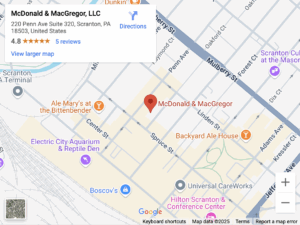
220 Penn Ave Suite 320, Scranton, PA 18503
(570) 209-7062
Scranton Office
220 Penn Ave Suite 320, Scranton, PA 18503
(570) 209-7062