
Malcolm L. MacGregor | January 16, 2026 | Personal Injury Blog

Being attacked is frightening and often leaves more than emotional scars. You may be dealing with medical bills, missed work, and long-lasting trauma. Many people in this situation wonder if they can sue their attacker. In Pennsylvania, the answer is often yes, even if the attacker also faces criminal charges.
Below is an overview of how civil lawsuits work after an assault and what you should know as you consider your options.
Criminal Cases vs. Civil Lawsuits
After an attack, the state may file criminal charges against the attacker. A criminal case focuses on punishment, such as jail time, probation, or fines. It is handled by a prosecutor, not by you.
A civil lawsuit is different. This is a legal action you bring to seek economic and non-economic damages for the harm you suffered. The goal is compensation, not punishment.
You can often file a civil lawsuit even if:
- The attacker is never arrested.
- Criminal charges are dropped.
- The attacker is found not guilty in criminal court.
The two cases are separate and can move forward at the same time.
What Counts as an Attack or Assault?
In civil law, assault generally involves placing someone in reasonable fear of imminent harm, while battery involves intentional, harmful, or offensive contact. This can include:
- Being punched, kicked, or shoved
- Being struck with an object
- Sexual assault or unwanted touching
- Threats that put you in immediate fear of harm
You do not need to have severe injuries to have a potential claim. Even minor physical injuries or serious emotional distress may support a lawsuit.
What Damages Can I Recover?
If you successfully sue someone who attacked you, you may be able to recover damages for a wide range of losses. These often include:
- Medical expenses, such as emergency care, hospital stays, therapy, and medication
- Lost wages if you missed work because of your injuries
- Pain and suffering, including physical pain and emotional distress
- Mental health treatment, such as counseling for anxiety, depression, or PTSD
- Scarring or disfigurement from the attack
In some cases involving especially outrageous or intentional conduct, punitive damages may also be available. These are meant to punish extreme behavior, though they are not awarded in every case.
Do I Have to Prove the Attack Happened?
Yes. In a civil case, you must show that the attacker caused your injuries. Helpful evidence may include:
- Police reports
- Medical records
- Photos of injuries
- Witness statements
- Surveillance or phone video
- Text messages or social media posts
The standard of proof in a civil case is lower than in a criminal case. You generally need to show that it is more likely than not that the attacker caused your harm.
What if the Attacker Says It Was Self-Defense?
Self-defense is a common argument in assault cases. An attacker may claim they were protecting themselves or someone else. Pennsylvania law allows self-defense in limited situations, but it does not excuse excessive force.
If the response went beyond what was reasonable under the circumstances, the attacker may still be held financially responsible. Each case depends on the specific facts.
How Long Do I Have to File a Personal Injury Lawsuit in Pennsylvania?
Pennsylvania has a statute of limitations that sets a deadline for filing most personal injury lawsuits. In many assault cases, you have two years from the date of the attack to file a civil claim.
If you miss this deadline, you may lose your right to seek compensation. Because exceptions can apply, it is wise to speak with a lawyer sooner rather than later.
What if the Attacker Has No Money?
Many people worry that suing is pointless if the attacker does not have assets. While this is a valid concern, it is not the end of the analysis. In some situations:
- An insurance policy may apply.
- A third party may share responsibility.
- A judgment can sometimes be collected over time.
A personal injury lawyer can review whether pursuing a claim makes financial sense in your situation.
Contact the Scranton Personal Injury Lawyers at McDonald & MacGregor, LLC for a Free Consultation
An assault can turn your life upside down, but you do not have to handle the legal aftermath alone. A civil lawsuit may help you recover money for medical bills, lost income, and the pain you have endured. For more information, contact an experienced Scranton personal injury lawyer at McDonald & MacGregor, LLC to schedule a free consultation today.
We proudly serve Scranton, Wilkes-Barre, Hazleton, Luzerne County, Lackawanna County, and surrounding areas.
McDonald & MacGregor, LLC
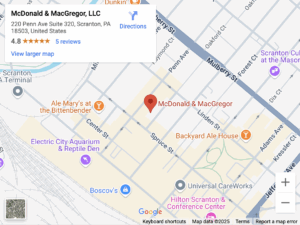
220 Penn Ave Suite 320, Scranton, PA 18503
(570) 209-7062
Scranton Office
220 Penn Ave Suite 320, Scranton, PA 18503
(570) 209-7062